Last Updated on May 3, 2026 by Irshad Quadri
Introduction: Can Gluten-Free Oats Reduce Cholesterol?
Nowadays people have become more conscious about their health, and cholesterol is one such problem that affects millions of people. You must have heard that oats help in controlling cholesterol, but do you know that gluten-free oats and some other surprising foods can also reduce cholesterol naturally? In this blog we will know about 7 surprising foods to lower cholesterol naturally for your heart and how you can control cholesterol without medicines!
____________________________________________
The 7-Day Cholesterol Reset
Our #1 protocol to lower LDL naturally without pills.
- Rapid Grocery "Swap-List"
- Zero-Cooking Meal Options
- Daily LDL Tracking Sheets
Table of Contents
Can Gluten-Free Oats Reduce Cholesterol?
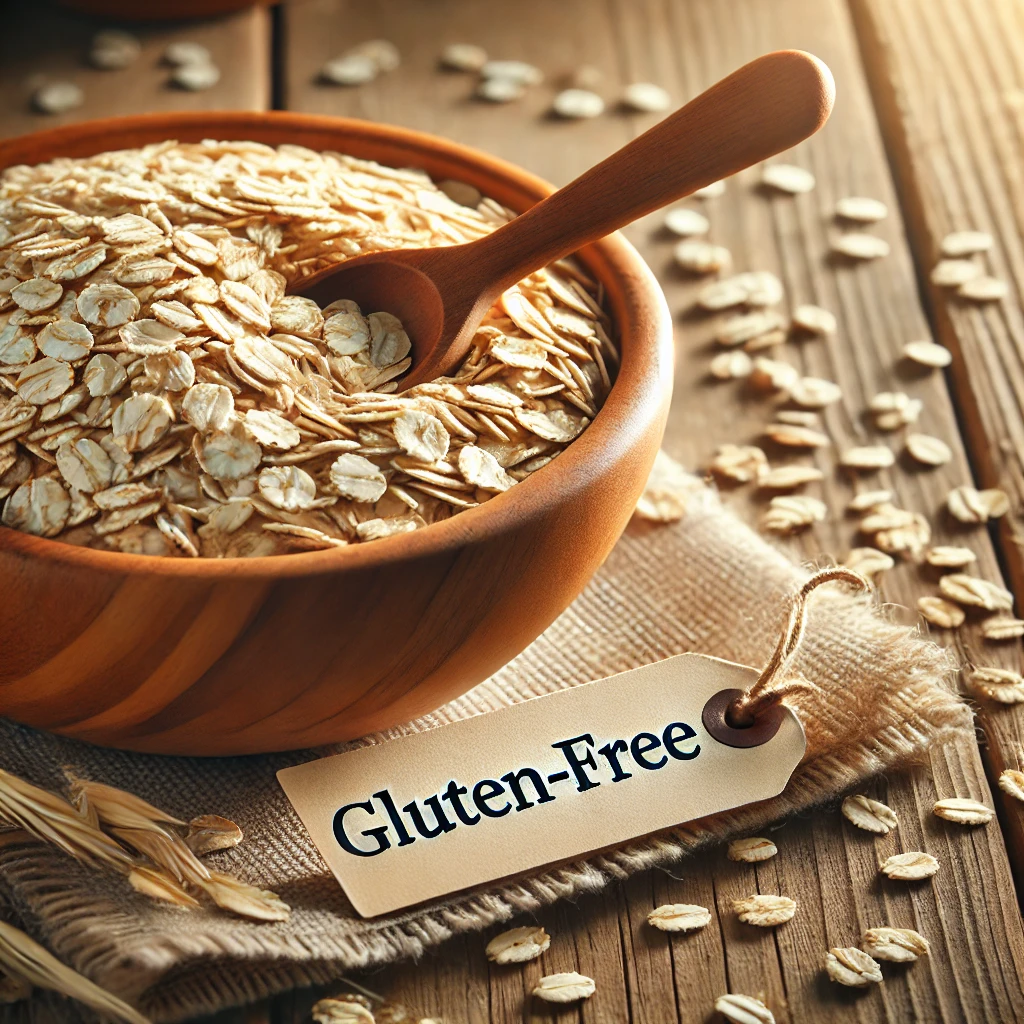
Role of Gluten-Free Oats in Lowering Cholesterol
Gluten-free oats are a natural beta-glucan (fiber) source that helps lower your LDL cholesterol (bad cholesterol). Studies show that taking 3g of beta-glucan fiber daily can reduce cholesterol by 5-10%.
Case Study: Oats vs. Cholesterol
A research study found that people who consumed oats daily for 8 weeks had significantly lower cholesterol levels. This study was published in the journal of the American Heart Association.
Research Link: Study on Oats and Cholesterol
________________________________________
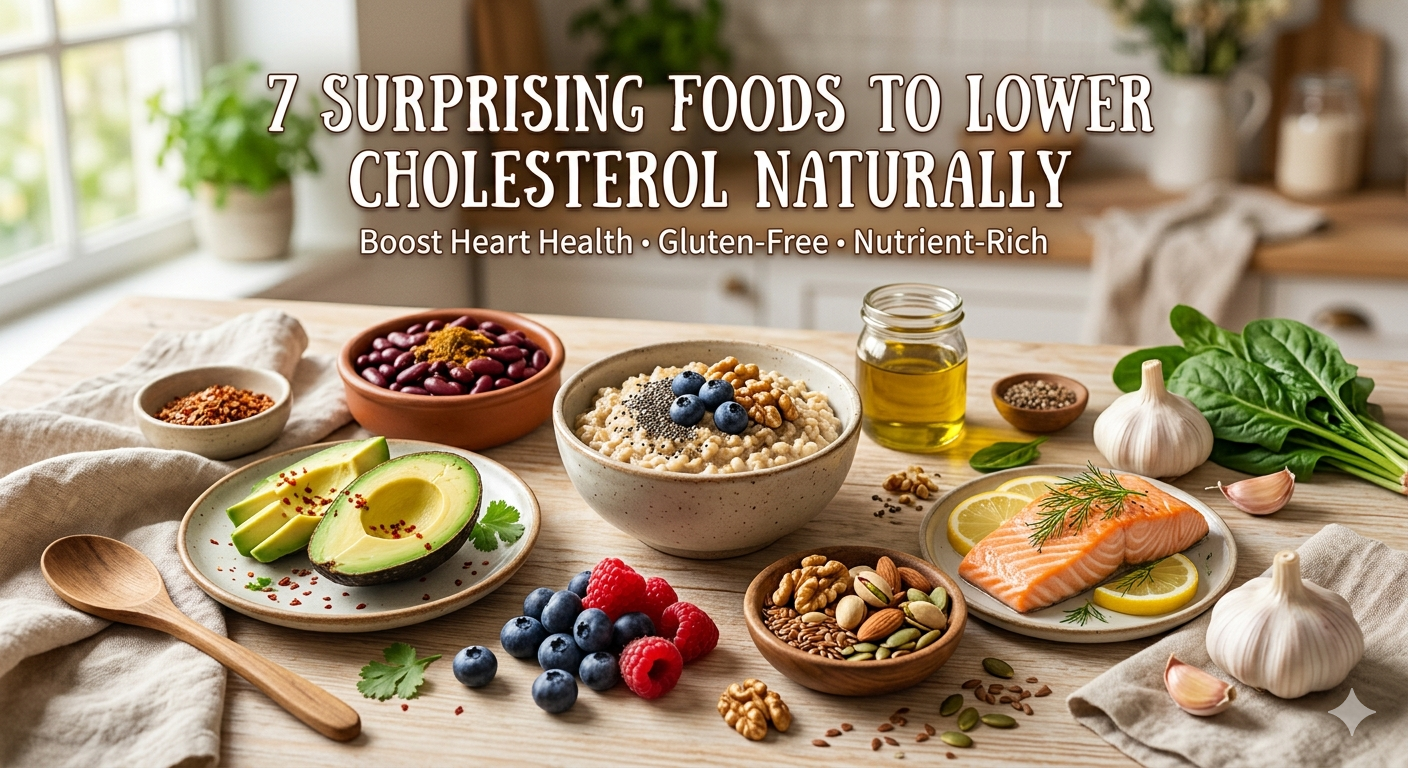
7 Surprising Gluten-Free Foods to Lower Cholesterol Naturally

1️⃣ Chia Seeds & Flaxseeds (Omega-3 & Fiber Superpower)
How does it help?
• High fiber reduces LDL cholesterol.
• Omega-3 fatty acids reduce the risk of heart diseases.
• How to use: sprinkle in Smoothies, salad, or soak in water.
2️⃣ Avocado (Healthy Fats for a Healthy Heart)
How does it help?
• Monounsaturated fats lower LDL cholesterol.
• Being potassium-rich, it also controls blood pressure.
• How to use: Spread on toast, add to salad.
3️⃣ Almonds & Walnuts (Heart-Healthy Nuts)
How do they help?
• Nuts contain plant sterols which prevent cholesterol from getting absorbed.
• Vitamin E & Omega-3 are also good for heart.
• How to use: Eat 5-6 almonds and 3-4 walnuts daily.
4️⃣ Legumes (Rajma, Chana, Dal)
How do they help?
• High fibre helps in lowering cholesterol levels.
• Protein-rich alternative which is gluten-free.
• How to use: Add it to lentils, soup or salad.
5️⃣ Dark Chocolate (Yes, this too!)
How does it help?
• Flavonoids and antioxidants reduce blood pressure.
• Increases HDL cholesterol (good cholesterol).
• How to use: Consume 75%+ dark chocolate.
6️⃣ Garlic (Cholesterol Fighter)
How does it help?
• A compound called Allicin reduces LDL cholesterol.
• Also controls blood pressure.
• How to use: Consume one garlic clove every day.
7️⃣ Green Tea (Fat & Cholesterol Burner)
How does it help?
• Catechins and antioxidants help in reducing cholesterol.
• It also helps in weight loss.
• How to use: Drink 2-3 cups of green tea a day.
________________________________________________
Freebie for you
If you are interested in Gluten-Free 7 Days Meal Plan, please fill in the below details & get your copy for Free:
Myth-Busting Section

Myth: “Gluten-Free Means Healthy”
✅ Fact: Not every gluten-free food is healthy. Some processed gluten-free foods are full of sugar and unhealthy fats. Natural gluten-free foods are best.
Myth: “Oats contain gluten”
✅ Fact: Oats do not naturally contain gluten, but contamination can occur. Always choose certified gluten-free oats.
Myth: “Only Diet can control Cholesterol”
✅ Fact: Along with Diet, exercise and lifestyle changes are also important.
Myth: “Cutting Out Gluten Automatically Lowers Cholesterol”
✅ Fact: Going gluten-free doesn’t guarantee lower cholesterol. It’s important to focus on fiber-rich foods like legumes, nuts, and leafy greens, which actively support heart health.
Myth: Gluten-Free Diets Lack Essential Nutrients for Heart Health
✅ Fact: While some gluten-free processed foods lack fiber and nutrients, whole gluten-free options like quinoa, chia seeds, and avocados provide heart-healthy benefits.
Myth: Gluten-Free Equals Low-Carb, Which Helps Cholesterol
✅ Fact: Many gluten-free foods are still high in refined carbs and sugars, which can increase cholesterol. Choosing whole grains like brown rice and buckwheat is key.
Myth: Dairy is the Best Alternative for Gluten-Free Dieters
✅ Fact: Some dairy products, especially full-fat ones, can raise cholesterol. Opting for plant-based alternatives like almond or flax milk can be a healthier choice.
________________________________________
Success Stories & Testimonials

Anita Sharma (Age 45, Delhi)
“After adding gluten-free oats and avocado to my diet, my cholesterol decreased by 15% in 3 months!”
Rahul Mehta (Age 50, Mumbai)
“I added green tea and walnuts to my diet, and my doctor also said that my LDL cholesterol has improved.”
________________________________________
🌍 Cholesterol Reduction Guide:

Diet Plan to Reduce Cholesterol:
| Meal | Foods |
| Breakfast | Gluten-free oats + Chia seeds smoothie |
| Mid-Morning Snack | Almonds & Walnuts |
| Lunch | Rajma-Chawal ya Daal-Roti (gluten-free) |
| Evening | Green Tea + Dark Chocolate |
| Dinner | Grilled Avocado Salad with Garlic Dressing |
________________________________________
Beyond Food: Advanced Habits for a Healthier Heart
Friends, when we talk about lowering cholesterol naturally, diet alone is simply not enough. Yes, oats and nuts are essential, but your lifestyle acts as an invisible force. If your goal is to minimize LDL (bad cholesterol) and optimize HDL (good cholesterol), you need to make some “smart tweaks” to your daily routine.
1. The “Fiber-Protein” Synergy
Simply consuming fiber isn’t enough. Research indicates that when you combine soluble fiber with plant-based protein, the rate at which cholesterol drops accelerates. For instance, try mixing a little soy milk or chia seeds with your oats. This combination signals the liver to absorb cholesterol from the bloodstream to produce extra bile salts, thereby lowering levels naturally.
2. Stress: The Silent Cholesterol Trigger
Did you know that excessive stress can cause your cholesterol levels to spike? When we are stressed, our bodies release cortisol and adrenaline. These hormones trigger the production of triglycerides and LDL. Therefore, 10 minutes of daily deep breathing or meditation is just as crucial as eating a healthy meal. Heart health isn’t merely a physical matter; it is also a game of mental balance.
3. Movement that Matters (Not Just Cardio)
People often assume that running alone is sufficient to lower cholesterol. However, the latest studies from 2026 suggest that Resistance Training (such as weightlifting or bodyweight exercises) actually alters the size of LDL particles. Small, dense LDL particles are more dangerous because they tend to get trapped in the arteries more easily. Exercise makes these particles larger and “fluffier,” which reduces the risk of a heart attack.
4. Sleep and Lipid Metabolism
If you get less than 6 hours of sleep, your body’s lipid metabolism becomes disrupted. Sleep deprivation can lead to an increase in an enzyme called “Lp-PLA2,” which triggers inflammation within the arteries. A good 7–8 hours of sleep provides your body with the time it needs to repair itself—a process that automatically helps to lower cholesterol naturally.
5. Cooking Oils: The Hidden Culprit
We often prepare healthy vegetable dishes, yet we use the wrong type of cooking oil. Instead of “refined” oils, opt for cold-pressed oils (such as mustard oil or extra virgin olive oil). These oils are rich in antioxidants, which prevent cholesterol from becoming oxidized. It is, in fact, oxidized cholesterol that primarily leads to the accumulation of “plaque” within the arteries.
6. Hydration and Blood Viscosity
There is a direct link between water intake and cholesterol levels. When the body becomes dehydrated, the blood thickens. Thickened blood exerts increased pressure on the arteries and promotes the formation of cholesterol deposits. Drinking at least 3–4 liters of water daily acts as a “natural cleanser” for the heart.
The Golden Secrets: Advanced Hacks for Heart Longevity
Simply looking at a list isn’t enough; consuming those items correctly is an art form. If you want to derive the maximum benefit from foods that naturally lower cholesterol, start following these 3 “Secret Strategies” today:
1. The “Pre-Meal” Fiber Trick
Have you ever heard of ‘Pre-loading’? Try consuming a small amount of soluble fiber exactly 15 minutes before your main meal (Lunch or Dinner)—such as a small bowl of salad or 1 spoonful of Isabgol (psyllium husk) mixed with water. This creates a “natural filter” layer within your intestines. When you consume your main meal, this layer blocks cholesterol and fats before they can be absorbed into the bloodstream.
2. Spices: The Natural Statin Alternative
The spices sitting in your kitchen aren’t just for flavor. Cinnamon (Dalchini) and Turmeric (Haldi) contain compounds that improve liver health. Adding a pinch of cinnamon powder to your oats or coffee daily helps reduce LDL oxidation. Remember: it is oxidized cholesterol that clogs arteries; therefore, spices rich in antioxidants are your best friends.
3. The “Night-Time” Metabolism Window
Your liver produces the highest amount of cholesterol during the night. For this reason, always keep your dinner light and eat it early (around sunset). If you consume a heavy meal late at night, your liver struggles to process it, causing “bad” cholesterol levels to spike. Consuming a cup of “Garlic Tea” or a small amount of garlic at night works like magic to regulate liver enzymes.
When you combine these small tweaks with foods that naturally lower cholesterol, you will see results twice as fast!
FAQs about gluten-free foods to lower cholesterol naturally
Q1. Is gluten-free oats safe for everyone?
✅ Yes, but if you have celiac disease or gluten sensitivity, consume only certified gluten-free oats to avoid contamination.
Q2. How much gluten-free oats is safe to eat daily?
✅ It is safe to consume 40-50 grams (½ cup cooked) oats daily, but if you do not consume much fiber, then gradually increase the quantity so that digestion goes smoothly.
Q3. Does a gluten-free diet automatically control cholesterol?
✅ No, being gluten-free alone does not control cholesterol. You need to consume gluten-free foods that contain fiber-rich and healthy fats.
Q4. Are all oats gluten-free?
✅ Naturally, oats are gluten-free, but they can become contaminated with wheat, barley or rye during processing. So it is important to consume certified gluten-free oats.
Q5. Which diseases are gluten-free oats helpful for?
✅ They are beneficial for high cholesterol, diabetes, blood pressure and digestion issues because they are fiber-rich.
Q6. Is just diet enough to control cholesterol?
✅ No, regular exercise, stress management and proper sleep are also important. Diet is a major factor, but lifestyle changes will also have to be made.
Q7. Do gluten-free oats help in weight loss?
✅ Yes, as they are fibre-rich which keeps you from feeling hungry for too long and improves digestion, which accelerates weight loss.
Q8. Can diabetic patients also take gluten-free oats?
✅ Yes, oats are low in glycemic index which helps in keeping blood sugar levels stable. But portion control is important.
Q9. If I don’t like oats, is there any alternative?
✅ Yes, you can have quinoa, brown rice, buckwheat or chia seeds which are gluten-free as well as cholesterol-lowering.
Q10. What are the other benefits of following a gluten-free diet?
✅ It improves digestion, reduces bloating, strengthens immunity and increases energy levels. But it is important that you follow a balanced gluten-free diet so that there is no nutrient deficiency.
Q11. Which are top 10 worst foods for high cholesterol?
✅Fried Foods – Deep-fried items like french fries and fried chicken are loaded with unhealthy trans fats, raising LDL cholesterol.
Processed Meats – Sausages, bacon, and hot dogs contain high saturated fats and preservatives that harm heart health.
Fast Food – Burgers, pizzas, and fried snacks are packed with unhealthy fats and refined carbs, increasing cholesterol levels.
Full-Fat Dairy – Whole milk, butter, and cheese are rich in saturated fats, which can elevate bad cholesterol.
Pastries & Baked Goods – Cakes, cookies, and doughnuts often contain trans fats and added sugars, worsening cholesterol.
Red Meat – Beef, lamb, and pork are high in saturated fats, contributing to high LDL cholesterol.
Margarine & Hydrogenated Oils – Contain trans fats, which are worse than saturated fats for heart health.
Ice Cream – Full of saturated fats and sugar, leading to weight gain and high cholesterol.
Potato Chips & Processed Snacks – High in trans fats, sodium, and unhealthy oils, negatively impacting cholesterol.
Alcohol (Excessive Consumption) – Can lead to high triglycerides, liver issues, and overall heart disease risk.
Additional Frequently Asked Questions
Yes. Current 2026 dietary guidelines focus on what you eat with the eggs. Avoid pairing them with saturated fats like bacon; instead, opt for fiber-rich vegetables or avocado.
Source: American Heart Association (2026) updates.
Not always. Many contain high levels of sodium and saturated tropical oils (like coconut oil). Stick to “whole” proteins like lentils, chickpeas, and tempeh for the best results.
ACV is not a magic bullet. It works best as a replacement for high-fat dressings rather than a standalone supplement for lipid profiles.
It’s a specific “portfolio” of four foods: soy protein, plant sterols, tree nuts, and soluble fiber. This combination can be as effective as low-dose statins.
Unfiltered coffee (French press/Espresso) contains cafestol, which can raise LDL. Switching to paper-filtered drip coffee solves this issue.
The 2026 consensus suggests the risks to blood pressure often outweigh the minor benefits red wine might have on “good” HDL cholesterol.
Psyllium husk is effective, but it lacks the antioxidants found in whole beans and berries. Use it as an addition, not a replacement.
You may see a drop in LDL within 4-6 weeks, though a 3-month window is usually required for a stabilized blood panel result.
Lp(a) is genetic and usually doesn’t respond to diet. The 2026 guidelines recommend every adult get tested for this specific risk factor once.
For more related FAQs, click here.
Try this free amazing tool and comment below
Conclusion: Start today!
If you want to reduce cholesterol naturally, then along with gluten-free oats include these 7 surprising foods in your diet. These are not only good for your heart but will also improve your overall health.
Which of these foods have you tried? Tell us in the comments!
Share and let this valuable information reach your friends and family!

About the Author
Mission: Making a positive health impact on 10 million families worldwide.
Irshad Quadri helps everyday Americans take control of their cholesterol and heart health — naturally, without giving up the foods they love. At iq4u81.blog, he shares science-backed diet tips, easy cholesterol-friendly meal ideas, and practical guides trusted by readers across the USA. He is also a published Amazon Author on cholesterol health.
▶ YouTube | 📌 Pinterest | Facebook | ✉ Email | 🌳 All Links