
Last Updated on April 12, 2026 by Irshad Quadri
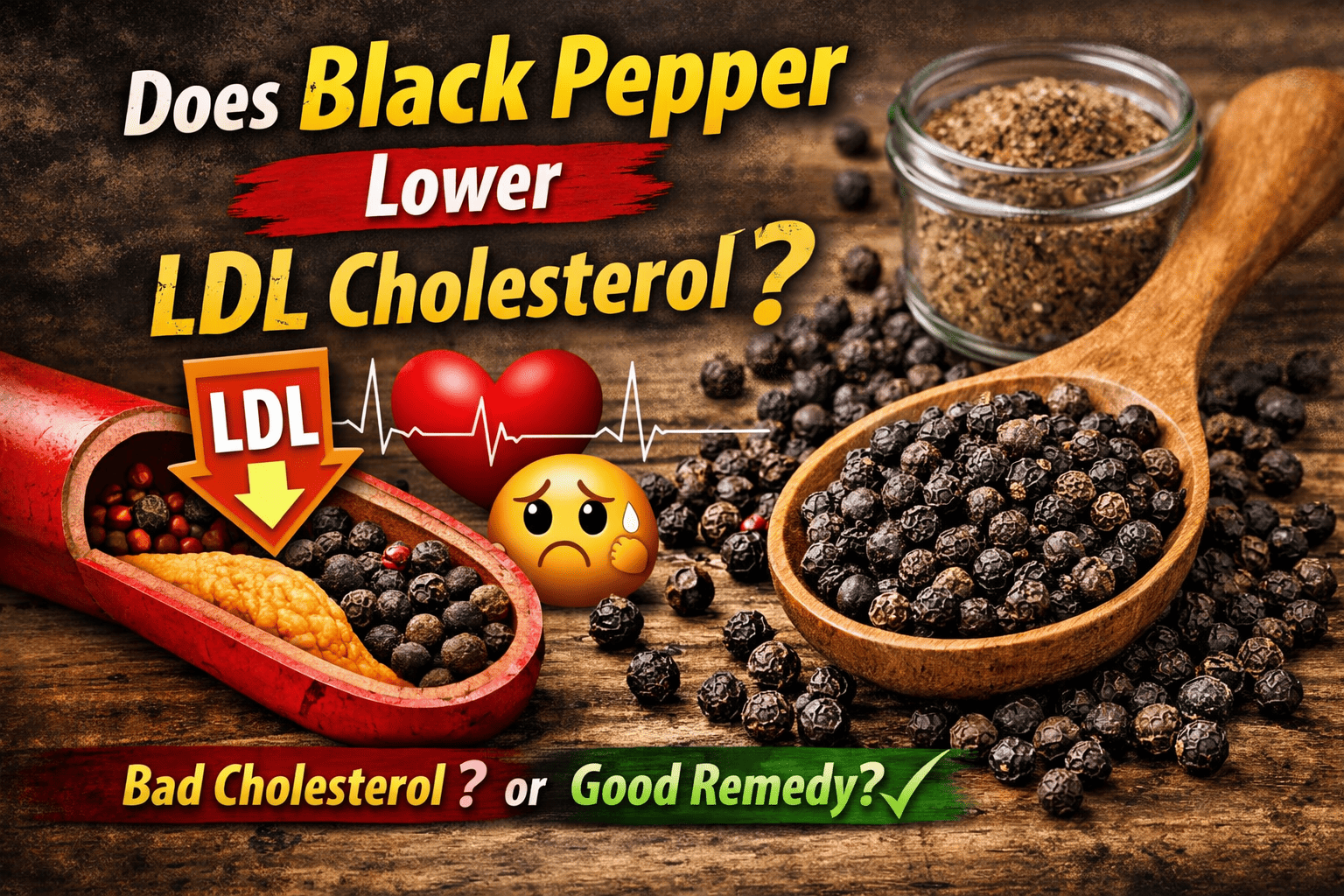
Introduction: Does Black Pepper Lower LDL Cholesterol naturally?
Think about it for a second. Your doctor says—”Your LDL cholesterol is high.”
And you panic. Medicines, side effects, a strict diet—everything starts racing through your mind.
But have you ever considered that the answer might be hiding right in your own kitchen?
Yes, we are talking about black pepper—that simple ingredient found in every household. The one you add to vegetables, sprinkle over eggs, or mix into soups. Inside that tiny little thing lies a powerful compound. Its name is piperine.
And today, that is exactly what we are going to talk about—in simple, easy-to-understand language.
Let’s understand Does black pepper lower LDL cholesterol naturally?
Why Has the Problem of High Cholesterol Become So Common?
In today’s world, high LDL cholesterol has become a very common problem. Oily foods, stress, lack of exercise—all these factors combine to increase the levels of “bad cholesterol” in your blood. And when LDL levels rise, the risk of heart disease increases as well.
Many people turn directly to medication, starting a regimen of statins. However, these medicines come with their own set of side effects. Consequently, people are now looking toward natural remedies. And that is precisely why black pepper—and specifically piperine—is currently in the spotlight of scientific research.
What Is Piperine?—A Simple Explanation
The pungent, sharp taste found in black pepper is due to piperine. It is a naturally occurring compound. But it serves a purpose far beyond just providing flavor. Scientists have discovered that piperine performs a wide range of functions within the body.
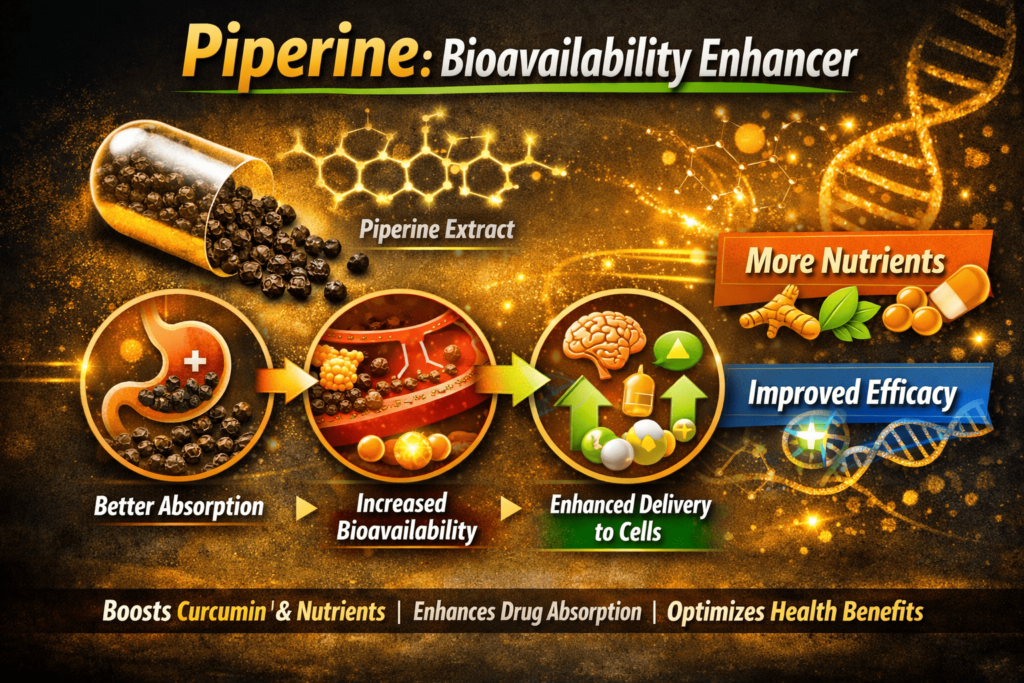
It acts as a “bioavailability enhancer”—meaning it helps the body absorb other nutrients more effectively. For instance, when consumed alongside turmeric, it significantly boosts the latter’s efficacy. But beyond that, piperine also works directly to regulate cholesterol absorption itself.
It sounds a bit surprising, doesn’t it? Such a common spice—yet it does so much! Why Is This Blog Helpful for You?
In this blog, we will tell you:
- How piperine can help naturally lower LDL cholesterol
- How it supports lipid metabolism in your body
- How you can easily incorporate it into your daily diet
- And whether actual research supports all of this or not
We won’t exaggerate anything. We will present exactly what science says—in simple, easy-to-understand terms.
So, let’s understand in detail and find out just how real the connection between black pepper and cholesterol actually is!
Table of Contents

1: What Is LDL Cholesterol — And Why Is It Important for You?
Let’s start with the basics. Because unless you properly understand the problem—the solution won’t work either.
So, first things first—what is cholesterol?
Cholesterol is a waxy, fat-like substance. It is produced naturally within your body; your liver manufactures it. And, in fact, it is actually essential for the body. It helps in the production of hormones, keeps cell walls healthy, and is also used to create Vitamin D.
So, what exactly is the problem?
The problem arises when cholesterol levels rise beyond what is necessary. And specifically, when LDL cholesterol levels increase.
LDL and HDL — What Is the Difference Between the Two?
Cholesterol doesn’t travel through the bloodstream alone. It travels in conjunction with lipoproteins. And this is where the concepts of LDL and HDL come into play.
Think of it this way:
LDL stands for Low-Density Lipoprotein. We refer to this as “bad cholesterol.” Why? Because it picks up cholesterol from the liver and deposits it onto the walls of your blood vessels. It’s just like how debris accumulates in a household drain—exactly like that.
HDL stands for High-Density Lipoprotein. We call this “good cholesterol.” It transports cholesterol back to the liver, which then processes it and eliminates it from the body. Essentially, it acts as a cleaner.
So, remember this simple rule:
✅ The higher your HDL — the better
❌ The higher your LDL — the more dangerous
What Effect Does High LDL Cholesterol Have on the Body?
This is a very important question. And the answer is bound to make you take notice.
When LDL levels are high, it gradually begins to stick to the inner walls of your blood vessels. This leads to the formation of a substance that doctors call plaque.
What does this plaque do?
- It narrows the blood vessels.
- Blood flow slows down.
- The heart has to work much harder.
- And then, one day, suddenly—a heart attack or stroke can occur.
Sounds scary, doesn’t it? But that is the reality.
And the most dangerous part is that high LDL cholesterol often presents no symptoms. You might continue to feel perfectly fine—while the problem is silently worsening inside. That is why it is also referred to as the “silent killer.”
So, Why Does LDL Rise—What Are the Causes?
Now you might be wondering—where does this LDL come from? Well, listen up:
Diet: Consuming excessive amounts of oily, fried, and processed foods causes LDL levels to rise. Refined flour (Maida), butter, and red meat—these are all major contributors.
Lack of Exercise: When you are not physically active, your HDL levels drop while your LDL levels increase.
Stress: Chronic stress raises cortisol levels in the body. This, too, has a negative impact on cholesterol levels.
Genetics: Sometimes, this runs in the family. If your parents had high cholesterol, your own risk is also elevated.
Smoking and Alcohol: Both of these habits lower HDL levels and raise LDL levels.
What Should a Normal LDL Level Be?
Take a look at this simple reference chart:
| LDL Level | What It Means |
|---|---|
| Less than 100 mg/dL | ✅ Ideal |
| 100–129 mg/dL | 🟡 Near optimal |
| 130–159 mg/dL | ⚠️ Borderline high |
| 160–189 mg/dL | 🔴 High |
| 190+ mg/dL | 🚨 Very high — consult a doctor |
If your LDL level is above 130, it is time to start taking this matter seriously. Diet, lifestyle, and natural remedies—it is essential to pay attention to all of them.
Lowering LDL Naturally — Is It Possible?
It is absolutely possible! And that is precisely the main point of this blog.
Medications become necessary when a condition is severe. However, if you are in the early stages—or simply seeking prevention—then natural dietary changes can be incredibly effective.
And playing a very interesting role in this regard is—black pepper and its compound, piperine.
In the upcoming sections, we will explore in detail how piperine naturally tackles LDL cholesterol; how it supports lipid metabolism; and how you can incorporate it into your daily routine—without any side effects.
So, stay tuned—the interesting part is just beginning!
2: Why Is Black Pepper So Special? — Meet Piperine!
So now, let’s get to the very heart of this entire blog post.
“Piperine“
You might not have heard this name before. But trust me—once you learn about it—you will never look at black pepper the same way again. This tiny substance is actually a powerhouse compound. And science backs this up, too.
So, let’s dive in—and understand it properly.
What Is Piperine? — In Plain and Simple Terms
When you eat black pepper—you get that spicy, sharp, slightly burning sensation, right? That distinct taste comes courtesy of piperine.
Piperine is a ** natural alkaloid.** It is found within black pepper—specifically in the Piper nigrum plant. This compound makes up only 5–9% of the pepper’s composition. Yet, even in such a small amount, it exerts a significant effect on the body.
Scientists have been researching piperine for quite some time, and the results are highly promising. It isn’t merely a flavoring agent; it is a bioactive compound with a multitude of health benefits.
Think of it this way: if black pepper were a superhero team, piperine would be its captain.
Piperine Isn’t Just for Taste — What Does It Actually Do in the Body?
This is a crucial point. Many people assume that spices exist solely to make food taste good. But black pepper goes far beyond that.
Piperine performs a variety of functions within the body:
1. It Is a Powerful Bioavailability Enhancer (meaning A bioavailability enhancer (or bioenhancer) is a natural or synthetic substance that, when added to a drug or nutrient, increases the amount of that substance that actually reaches the bloodstream and gets used by the body.
In simple words, they act like “molecular escorts” or “boosters” that help medicines overcome the body’s natural defenses, allowing lower doses of medicine to be more effective.)
This is piperine’s most renowned property. Bioavailability refers to—how much of a nutrient your body is actually able to absorb.
For instance—you may have heard that turmeric is incredibly healthy. However, on its own, turmeric is absorbed very poorly by the body. When you combine it with black pepper—the absorption of turmeric increases by up to 2000%.
Yes—2000%! This is no exaggeration—it is the result of actual research.
So, piperine basically “unlocks” other healthy compounds, enabling the body to utilize them more effectively.
2. Possesses Strong Antioxidant Properties
Piperine contains powerful antioxidant properties. What do antioxidants do? They fight against free radicals within the body. Free radicals are harmful molecules that damage cells. And this very damage is a major contributing factor to heart disease and high cholesterol.
Thus, piperine protects the body from the inside out.
3. Provides an Anti-Inflammatory Effect
There is a deep connection between chronic inflammation and high LDL cholesterol. When inflammation levels rise in the body, cholesterol levels also become disrupted.
Piperine helps to reduce this inflammation. It keeps blood vessels healthy and protects the heart.
4. Directly Impacts Lipid Metabolism
And this is precisely the aspect most relevant to this blog post. Piperine doesn’t merely block cholesterol absorption—it also regulates lipid metabolism.
In other words, it fundamentally alters the way the body processes cholesterol internally. We will discuss this in greater detail in the upcoming sections.
Why is Black Pepper Called the “King of Spices”?
Black pepper didn’t earn this title without good reason.
For centuries—spanning from Ayurveda to Traditional Chinese Medicine—black pepper has been revered as a healing spice. In ancient times, it was considered so valuable that it was even referred to as “black gold.” It was a commodity traded extensively, and wars were even fought over it.
And today—modern science is confirming what ancient healers have known all along. Research indicates that black pepper possesses the following properties:
- ✅ Anti-inflammatory — reduces internal inflammation
- ✅ Antioxidant — protects against free radicals
- ✅ Antimicrobial — fights against harmful bacteria
- ✅ Lipid-lowering — exerts a positive effect on cholesterol levels
- ✅ Bioavailability enhancer — boosts the absorption of other nutrients
So many properties—packed into a tiny peppercorn. Amazing, isn’t it?
Piperine and LDL Cholesterol — What is the Connection?
Now, let’s get straight to the point.
Studies have shown that piperine helps to naturally lower LDL cholesterol. How does it do this? Essentially, in two ways:
The First Way — it prevents the absorption of cholesterol in the intestines. This means that the cholesterol you consume through your diet does not enter the bloodstream in excessive amounts.
The Second Way — it improves cholesterol processing within the liver. The liver becomes more efficient at handling excess cholesterol.
Together, these two mechanisms create a powerful system for natural cholesterol management.
And the best part? All of this is achieved through a natural dietary compound—no synthetic medicines, and no harsh chemicals.
So, Will Simply Eating Black Pepper Fix Your Cholesterol?
We want to be completely honest here.
Black pepper serves as a supportive remedy. This is a supplement—not a magic cure. If your LDL levels are extremely high, consulting a doctor is essential. Do not discontinue any medications without professional advice.
However, if you:
- Wish to improve your diet
- Want to support your cholesterol levels through natural means
- Or are looking to take preventive measures
Then piperine is a very promising natural option that you can incorporate into your lifestyle.
In the next section, we will examine in detail exactly how piperine blocks cholesterol absorption—and what processes take place within the body—explained in the simplest possible language.
Stay tuned!
3: How Does Piperine Block Cholesterol Absorption? — The Inside Story!
Now, let’s move on to a very interesting part.
In above section, you learned what piperine is. Now, let’s understand what it actually does inside the body—how it prevents cholesterol from entering the bloodstream, and why it serves as such an effective natural remedy.
Don’t worry—we won’t be delivering a complicated science lecture. We’ll explain everything in simple, easy-to-understand language—just like a conversation between two friends.
First, Understand This — Where Does Cholesterol Come From?
Cholesterol enters your body from two main sources:
Source #1 — The Liver:
Your liver produces cholesterol on its own. This is a natural process. The body requires a certain amount of cholesterol for various essential functions—such as producing hormones, building cells, and supporting other vital processes.
Source #2 — Food:
When you consume oily foods, dairy products, meat, or processed snacks, cholesterol enters your body along with them. This is known as dietary cholesterol.
And it is this very dietary cholesterol that becomes a major problem when it accumulates in excess.
Now, the question is: How does this dietary cholesterol actually make its way into the bloodstream?
Cholesterol’s Journey — From Plate to Bloodstream
When you eat a meal, the food travels to your stomach. From there, it moves into the small intestine. It is here that a specific process takes place, known as cholesterol absorption.
Located on the walls of the small intestine are specialized transporter proteins. These proteins extract the cholesterol from the food you’ve eaten and push it into the bloodstream.
The most important of these proteins is named:
NPC1L1 — Niemann-Pick C1-Like 1 Protein
The name might sound a bit intimidating, but the underlying concept is quite simple.
Think of it this way: NPC1L1 acts just like a doorman. It stands guard right there on the wall of the intestine. Whenever cholesterol arrives, this “doorman” ushers it inside and sends it into the bloodstream.
The more active this doorman is, the more cholesterol enters the bloodstream—and LDL levels rise.
Now, what would happen if we could block this doorman?
Piperine’s Role: Blocking the Doorman!
And that is exactly what piperine does.
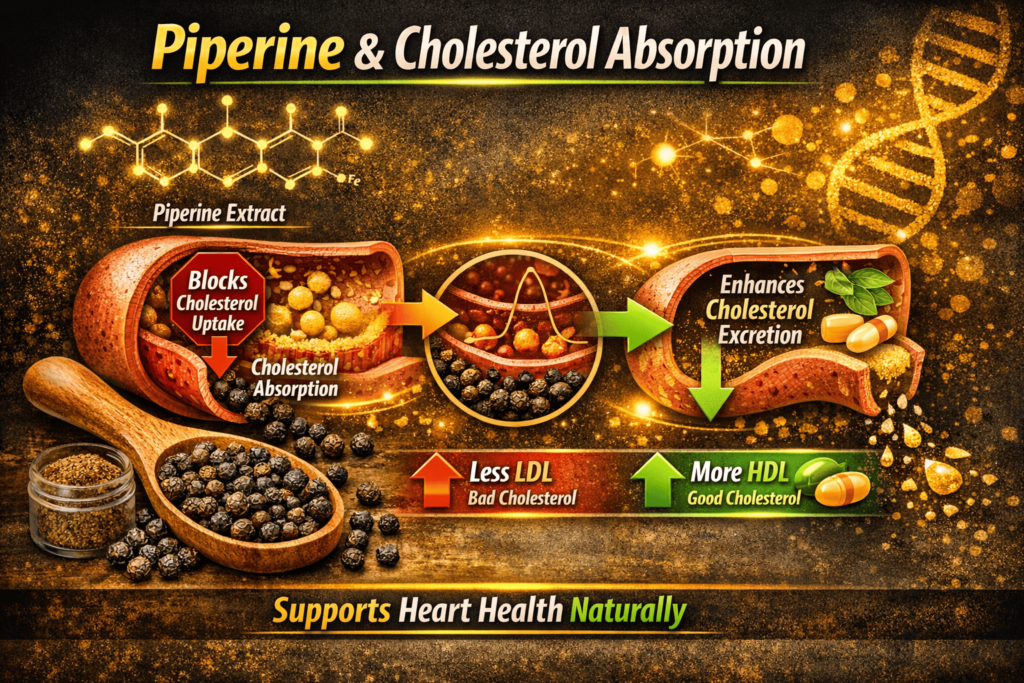
Research has shown that piperine acts directly upon the NPC1L1 protein. It effectively “internalizes” this doorman—meaning it removes it from the cell wall and draws it inside the cell.
Simply put: piperine takes that cholesterol doorman off duty.
When the doorman is off duty, cholesterol cannot be absorbed into the bloodstream. Instead, it passes straight out of the body—as waste.
The result? LDL cholesterol levels in the blood decrease. Naturally. Without the need for any medication.
And it doesn’t stop at NPC1L1; piperine also acts on another protein:
SR-BI — Scavenger Receptor Class B Type 1
This, too, is a cholesterol transporter. Piperine slows this one down as well. This creates a “double action”—effectively closing two doors to cholesterol entry.
What Else Does Piperine Do in the Intestines? (Some technical details however it’s good to know, don’t worry)
Beyond simply removing the doorman, piperine performs several other functions at the intestinal level.
It Slows Down the ACAT2 Enzyme:
ACAT2 is an enzyme that converts cholesterol into a specific form, making it easier for the body to absorb. Piperine down-regulates the activity of this enzyme. This means the cholesterol never gets properly prepared for absorption.
It Also Affects the MTP Protein:
MTP stands for Microsomal Triacylglycerol Transport Protein. This protein packages cholesterol and fats before releasing them into the bloodstream. Piperine slows down this packaging process as well. So just imagine—piperine is blocking three things simultaneously:
| What It Blocks | The Result |
|---|---|
| NPC1L1 “Doorman” | Cholesterol does not enter the bloodstream |
| ACAT2 Enzyme | Cholesterol is not prepared for absorption |
| MTP Protein | Cholesterol is not packaged for transport into the blood |
A three-pronged blockage—courtesy of a single natural compound. Pretty amazing, isn’t it?
Fecal Excretion — Cholesterol Gets Flushed Out
Now, listen to this as well—this part is quite interesting.
When piperine blocks cholesterol absorption, where does that cholesterol go? It gets expelled from the body along with the stool. This process is known as fecal cholesterol excretion.
Research has shown that after taking piperine, cholesterol levels in the feces increase significantly. This means that instead of absorbing the cholesterol, the body is actively flushing it out.
This is exactly what you want to happen when your LDL levels are high.
Piperine and Turmeric — A Powerful Cholesterol-Fighting Duo
Here is a bonus tip for you.
Piperine alone is already quite effective at blocking cholesterol absorption. But when you combine it with turmeric, the effect becomes even more powerful.
Turmeric contains curcumin—which is, in its own right, a cholesterol fighter. However, the problem is that curcumin alone……it gets absorbed very poorly.
And this is where piperine steps in to perform its role as a bioavailability enhancer. Piperine dramatically increases the absorption of curcumin. Together, the two form a powerful natural cholesterol management combo.
Therefore—using turmeric and black pepper together is a very smart dietary choice. Especially if you have high LDL levels or wish to manage your cholesterol naturally.
So, What Does This Mean for You in Practical Terms?
The simple fact is this:
When you regularly include black pepper in your diet, you are activating a natural process that:
- ✅ Slows down cholesterol absorption in the intestines
- ✅ Prevents LDL cholesterol from entering the bloodstream
- ✅ Eliminates excess cholesterol from the body
- ✅ Enhances the effectiveness of natural remedies like turmeric
This isn’t a miracle—it is science-backed natural support.
In the next section, we will explore how piperine works not just on absorption, but on your entire lipid metabolism—and how it also helps improve your HDL levels.
It’s getting interesting—stay tuned!
4: Piperine and Lipid Metabolism — What Happens Inside Your Body?
Now, let’s dig a little deeper.
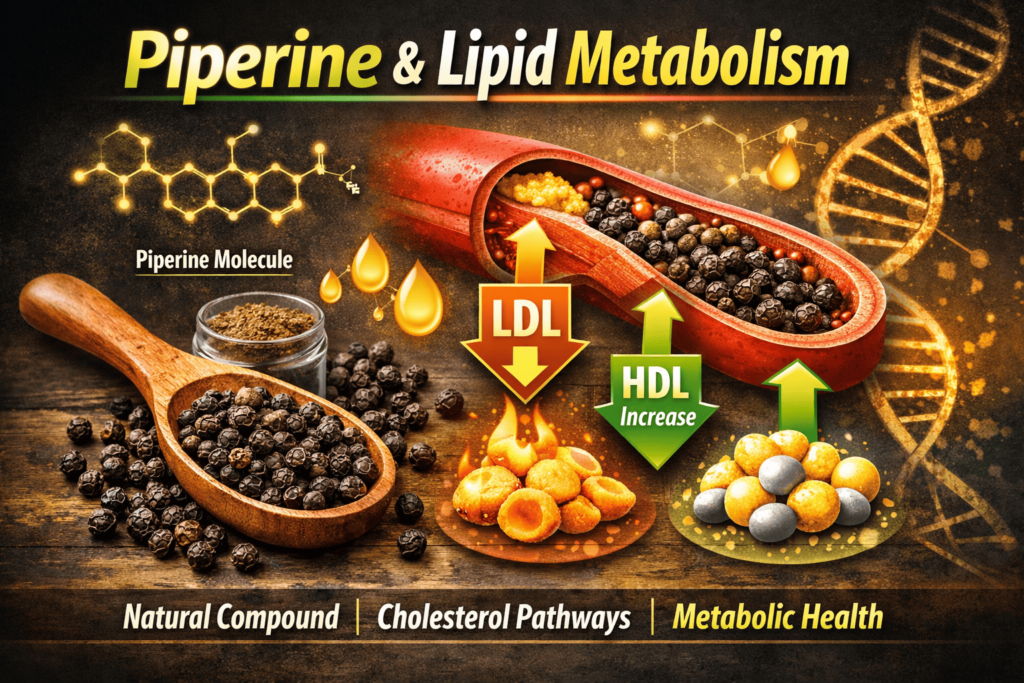
In above section, you learned how piperine inhibits cholesterol absorption. But piperine’s work doesn’t end there. It goes a step further. It also directly affects your body’s lipid metabolism.
And this is precisely what sets piperine apart from being just an ordinary spice.
So, come along—let’s understand this in the simplest possible terms.
What Is Lipid Metabolism? — An Analogy Using a Household Budget
First, let’s grasp the meaning of lipid metabolism.
Lipid means fats. And metabolism means processing. So, lipid metabolism is basically the process by which your body uses, stores, and eliminates fats and cholesterol.
Think of it this way: imagine there is an accountant in a household. This accountant decides where the money goes—how much is saved, how much is spent, and whatever is surplus gets moved out.
Your liver acts as that very accountant—specifically for fats and cholesterol.
When this accounting system functions correctly, LDL levels remain low, and HDL levels remain healthy. When it malfunctions, a condition known as dyslipidemia occurs—meaning the levels of “bad fats” in the blood rise.
And piperine helps to optimize this accounting system. We will explore exactly how it does this in the following section.
How Does Piperine Act on the Liver?
The liver serves as your body’s primary cholesterol processing center. It houses LDL receptors. These receptors capture LDL cholesterol from the bloodstream and transport it into the liver, where it is processed and subsequently eliminated from the body.
The more active these receptors are, the more efficiently LDL is cleared from the blood. Research has shown that piperine increases the activity of these LDL receptors. This means the liver begins to filter “bad cholesterol” from the bloodstream more efficiently.
It performs exactly the same function as statin medications—but naturally. Without any side effects.
Furthermore, piperine also activates an important protein known as SREBP. This protein signals the liver to “produce more LDL receptors.” More receptors mean more LDL clearance—leading to better lipid metabolism.
Piperine Also Impacts Triglycerides
Alongside cholesterol, triglycerides also pose a significant health concern.
What exactly are triglycerides? They are a type of fat found in the bloodstream. When you consume excess calories, the body converts them into triglycerides and stores them. When these levels become elevated, the risk of heart disease increases.
Research has clearly demonstrated that piperine significantly reduces triglyceride levels. It regulates lipid metabolism and prevents the body from storing excess fat.
In one study, when rats maintained on a high-fat diet were administered piperine, the following results were observed:
- ✅ A significant reduction in LDL cholesterol
- ✅ A decrease in VLDL levels
- ✅ Triglyceride levels were brought under control
- ✅ HDL—or “good cholesterol”—increased
All of this was achieved simultaneously through piperine supplementation alone. These results are genuinely promising.
What Is VLDL—And Why Does Piperine Target It?
You just heard the term VLDL; so, let’s understand what it is.
VLDL stands for Very Low-Density Lipoprotein. It is essentially another “bad cousin” of LDL. The liver produces it and releases it into the bloodstream. VLDL primarily carries triglycerides. And as it circulates through the bloodstream, it gradually converts into LDL.
Therefore, if you can control VLDL, LDL remains under control automatically.
And piperine does exactly this. It acts on the specific part of lipid metabolism where VLDL is synthesized. As a result, the liver produces less VLDL. Ultimately—LDL levels in the blood also remain low.
It is a chain reaction—and piperine breaks that chain at precisely the right point. 🔗
Increasing HDL — Another Function of Piperine
So far, we have discussed how piperine reduces LDL, VLDL, and triglycerides. But there is another important aspect as well.
Piperine also improves HDL cholesterol levels.
HDL—or “good cholesterol”—acts as a scavenger, collecting excess cholesterol from the blood vessels and transporting it back to the liver. The higher the HDL levels, the more efficient the cleansing process, and the healthier the heart.
Research has shown that piperine supplementation leads to a noticeable increase in HDL levels. This means it doesn’t merely eliminate “bad” cholesterol; it also boosts “good” cholesterol.
This offers a dual benefit:
❌ Lower LDL
✅ Increase HDL
Achieving both simultaneously represents the best possible outcome for lipid metabolism.
Piperine and Dyslipidemia — A Natural Solution?
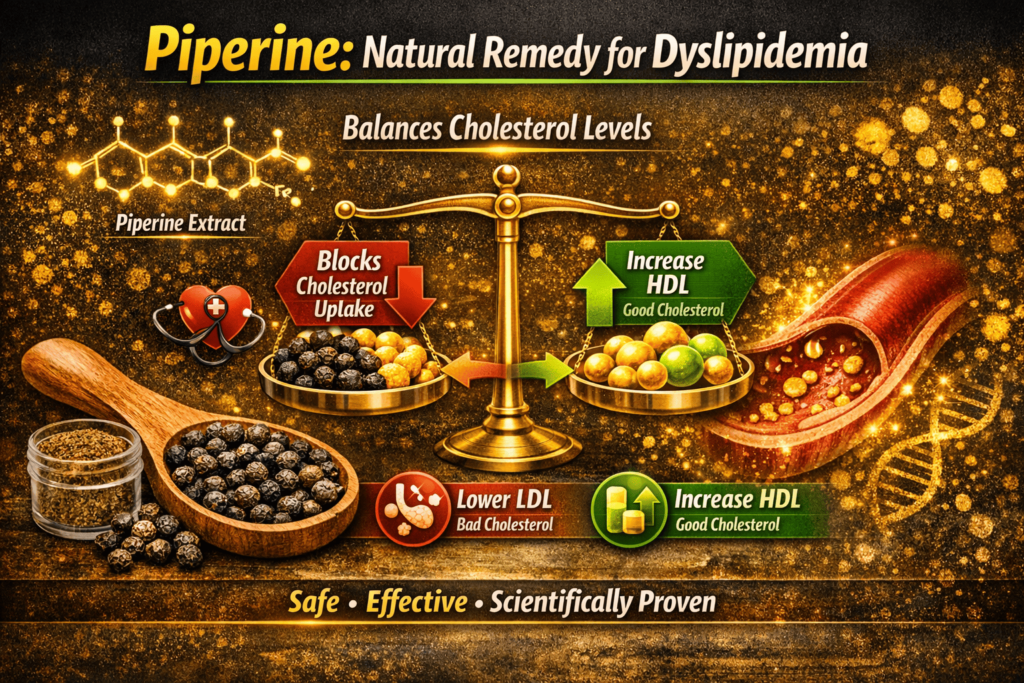
Dyslipidemia refers to an imbalance of lipids in the bloodstream—specifically, when LDL levels are elevated while HDL levels are low.…or if triglyceride levels are elevated—these are all signs of dyslipidemia.
In simple words, having unhealthy or abnormal levels of fats (lipids)—such as cholesterol or triglycerides—in your blood. It usually means your “bad” cholesterol (LDL) or triglycerides are too high, or your “good” cholesterol (HDL) is too low. This condition often has no symptoms but increases heart disease risk.
And in today’s world—dyslipidemia has become extremely common. A poor diet, a sedentary lifestyle, and stress—all combine to exacerbate this condition.
Doctors typically prescribe statins. These are effective—but they also come with side effects. Muscle pain, liver issues, and digestive problems—these are all common complaints among statin users.
Consequently, people are seeking natural alternatives. And piperine stands out as a promising option. It naturally regulates lipid metabolism—without harsh chemicals, and without major side effects.
Important Note: We are not suggesting that piperine should replace your prescribed medication. If your doctor has prescribed medication, do not discontinue it. However, you can certainly consider incorporating piperine as a form of complementary dietary support.
A Quick Summary — How Does Piperine Impact Lipid Metabolism?
Let’s do a quick recap:
| Piperine’s Action | Effect on the Body |
|---|---|
| Activates LDL receptors | Clears LDL from the bloodstream |
| Reduces VLDL production | Automatically lowers LDL levels |
| Reduces triglycerides | Decreases excess fat in the blood |
| Increases HDL levels | Improves “good” cholesterol levels |
| Regulates lipid metabolism | Enhances overall cholesterol balance |
Looking at this table, you can really see—just how many levels piperine operates on, can’t you?
It is not merely a spice—it is a natural compound for lipid management.
What’s Up Next?
Now, we’ll move on to Section 5—where we will explore piperine as a natural remedy for dyslipidemia. We’ll discuss how you can incorporate it into your daily routine, and just how much more powerful it becomes when combined with turmeric.
This section is going to be very practical—we promise!
Stay tuned!
5: Piperine — A Natural Remedy for Dyslipidemia?
Now, let’s move on to the section that is most practical for you.
So far, you have understood what LDL cholesterol is. What piperine does. How it inhibits cholesterol absorption. And how it improves lipid metabolism.
Now, the question is this — can piperine actually serve as a natural remedy for dyslipidemia?
Let’s discuss this honestly and clearly.
First, Understand This — What Is Dyslipidemia?
Dyslipidemia — the word sounds a bit intimidating. But the concept is simple.
When the balance of fats in your blood becomes disrupted — it is called dyslipidemia. This means:
- LDL — becomes too high
- HDL — becomes too low
- Triglycerides — increase
- VLDL — becomes elevated
All of these factors combine to form a dangerous combination. This combination significantly increases the risk of heart disease, stroke, and atherosclerosis.
And in today’s times — dyslipidemia has become an epidemic. In India alone, hundreds of thousands of people are affected by this problem. And the worst part is — most people aren’t even aware that they have dyslipidemia. There are no symptoms. There is no pain. Then, one day, a blood test result arrives — and the numbers leave you in shock.
Why Are People Turning Towards Natural Remedies?
This is a very valid question.
Doctors prescribe statins for dyslipidemia. Statins are effective — there is no doubt about that. However, they also come with certain common issues:
Side Effects:
- Muscle pain and weakness
- Negative effects on liver function
- Digestive issues
- Memory problems have also been reported in some individuals
Long-Term Dependency:
Statins usually have to be taken for a lifetime. Once you start taking them, it becomes difficult to stop.
Cost:
Long-term medication can be expensive. Especially in India, where not everyone has access to health insurance.
Consequently—many people are seeking natural dietary approaches. Something that is:
- ✅ Safe
- ✅ Affordable
- ✅ Easy to incorporate into a daily diet
- ✅ Free from side effects
And this is where piperine emerges as a highly promising natural remedy.
How Does Piperine Help with Dyslipidemia?
Now, let’s get straight to the point—the connection between piperine and dyslipidemia.
Research has consistently shown that piperine supplementation leads to the following:
Reduced LDL:
Piperine targets LDL cholesterol at multiple levels. It inhibits absorption in the intestines. It activates LDL receptors in the liver. And it reduces VLDL production. A three-pronged attack—from a single natural compound.
Increased HDL:
Simply lowering “bad” cholesterol isn’t enough. Increasing “good” cholesterol—HDL—is equally essential. And piperine accomplishes this as well. Studies have observed significant improvements in HDL levels following piperine intake.
Triglycerides Under Control:
In cases of dyslipidemia, triglycerides act as a major villain. By regulating lipid metabolism, piperine naturally lowers triglyceride levels.
Reduced Inflammation:
There is a deep-seated link between dyslipidemia and chronic inflammation; the two mutually exacerbate one another. Piperine’s anti-inflammatory properties help to break this vicious cycle.
Together, these effects constitute a comprehensive natural approach to managing dyslipidemia.
Piperine and Turmeric—Nature’s Ultimate Cholesterol-Fighting Duo
Now, let’s discuss a truly game-changing combination.
Many of you likely already know that turmeric—or haldi—is a potent weapon against high cholesterol. It contains curcumin, which helps to lower LDL cholesterol, reduce inflammation, and protect the heart.
However, there is one catch. Curcumin alone is absorbed very poorly by the body. Its bioavailability is extremely low. This means you could keep consuming turmeric—but your body wouldn’t be able to utilize it effectively.
And this is where piperine has its superhero moment.
Piperine is a powerful bioavailability enhancer. When you combine turmeric with black pepper, curcumin absorption increases by up to 2000%. This isn’t just a marketing claim—it is a result of actual published research.
So, practically speaking:
Turmeric + Black Pepper = Nature’s Most Powerful Cholesterol-Fighting Duo
Together, they:
- ✅ Significantly reduce LDL cholesterol
- ✅ Improve HDL levels
- ✅ Control triglycerides
- ✅ Help naturally manage dyslipidemia
- ✅ Optimize lipid metabolism
- ✅ Protect the heart from inflammation
One study observed that the turmeric-plus-piperine combination achieved a significantly greater reduction in LDL levels compared to turmeric alone. This implies that using the combination is far more effective than using either ingredient individually.
Can Piperine Replace Statins? Can It Help?
This is a very common question. And we will give you an honest answer.
For now — no.
Piperine is a promising natural remedy. The research is encouraging. However, large-scale human clinical trials remain limited at this stage. Most of the strong evidence comes from animal studies and laboratory research.
So, practically speaking:
If your LDL is mildly elevated:
Piperine can be quite helpful as a form of dietary support. Improve your diet. Exercise regularly. And include black pepper and turmeric in your daily meals.
If your LDL is moderately high:
You should definitely consult a doctor. However, incorporating piperine into your dietary changes serves as a smart, supportive step alongside medical advice.
If your doctor has prescribed medication:
Do not stop taking your medicines without your doctor’s advice. Use piperine as a complementary natural support. Inform your doctor that you wish to use black pepper or piperine supplements.
The honest truth is this — piperine is a tool, not a complete solution. However, it is a very powerful tool. And it is also completely safe — provided it is consumed in normal dietary amounts.
Should You Take Piperine Supplements or Just Black Pepper?
This, too, is an excellent question.
Option 1 — Black Pepper in Your Daily Diet:
This is the most natural and safest option. Aim to use 1–2 teaspoons of black pepper in your meals every day. Add it to vegetables, lentils (dal), eggs, soups—wherever possible.
Option 2 — Turmeric + Black Pepper Combo:
Add a pinch of black pepper to turmeric milk—also known as “Golden Milk.” This creates a powerful natural remedy for dyslipidemia (imbalanced blood lipid levels). Drinking this daily offers long-term health benefits.
Option 3 — Piperine Supplements:
Piperine extract supplements are available on the market. These come in a concentrated form. However, it is advisable to seek counsel from a doctor or nutritionist before taking them. Especially if you are already taking any medication—because piperine can cause drug interactions.
A Real-Life Tip — How to Get Started?
If you want to start right away—try this simple routine:
Morning: A glass of turmeric milk—with a pinch of black pepper
Lunch/Dinner: Sprinkle freshly ground black pepper over your vegetable dishes, dal, or curry
Salad: Add black pepper + olive oil + lemon to your salad as well—this combination is highly beneficial for LDL cholesterol
Evening: Turmeric tea with black pepper—a soothing and healthy habit
These small changes—when practiced with daily consistency—have a positive effect on lipid metabolism in the long run. And they help in naturally managing dyslipidemia.
Quick Summary — Piperine and Dyslipidemia
| Problem | Piperine’s Action |
|---|---|
| High LDL cholesterol | Reduces it through multiple pathways |
| Low HDL cholesterol | Naturally improves it |
| High triglycerides | Lowers them by regulating lipid metabolism |
| Chronic inflammation | Reduces it through anti-inflammatory action |
| Low curcumin absorption | Increases bioavailability by up to 2000% |
This table clearly demonstrates the many fronts on which piperine works to combat dyslipidemia.
What’s in the Next Section?
In next section, we will discuss how to practically use black pepper for its cholesterol-lowering benefits. How much you should consume daily. Which combinations are best. And what precautions you should take.
It will be a very practical and actionable section—promise!
Stay tuned!
6: How to Use Black Pepper for Cholesterol? — A Practical Guide!
By now, you have gained a great deal of understanding:
What LDL cholesterol is. What piperine does. How it inhibits cholesterol absorption. How it improves lipid metabolism. And how it acts as a natural remedy for dyslipidemia.
Now comes the most important question—
“Okay, that’s great—but how do I actually use this in practice?”
And that is exactly the purpose of this section: to provide simple, easy, and completely actionable steps—steps you can start implementing right away, starting today.
How Much Black Pepper Should You Consume Daily?
This is the very first question everyone asks.
There is no official “prescribed dose” for black pepper—simply because it is not a medication. However, based on research and expert consensus, there is a general guideline:
✅ 1 to 2 teaspoons of freshly ground black pepper daily — this is considered a safe and effective amount.
There is no need to consume more than this. Taking excessive amounts may lead to digestive discomfort. Furthermore, piperine functions most effectively within this specific dosage range.
An important tip: always use freshly ground black pepper. The potency of piperine diminishes significantly in pre-ground, packaged pepper. Grinding it fresh ensures you get the maximum amount of piperine.
The Best Ways to Use Black Pepper — In Your Daily Life
Now, let’s look at how you can easily—and deliciously—incorporate black pepper into your daily routine:
Morning Routine — Golden Milk
Upon waking up in the morning, prepare a glass of turmeric milk (Haldi Doodh). It consists of:
- 1 cup of warm milk — either dairy or plant-based options work well
- ½ teaspoon of Haldi — turmeric
- 1 pinch of black pepper — freshly ground
- A little honey — for taste
This combination represents nature’s ultimate duo for fighting cholesterol. Piperine boosts the absorption of turmeric’s curcumin by up to 2000%. Together, the two exert a powerful effect on LDL cholesterol and also support lipid metabolism.
This is a habit that genuinely helps to naturally manage dyslipidemia over the long term.
How to Use at Breakfast
- Sprinkle freshly ground black pepper over eggs.
- Black pepper and lemon on avocado toast—this combination also improves the absorption of healthy fats.
- You can add black pepper to Poha or Upma during the tempering (tadka) stage.
- A pinch of black pepper in your smoothie—especially if it also contains turmeric.
Use at Lunch and Dinner
This is the easiest part. Simply make a conscious effort to add black pepper to your regular cooking:
- In Dal (Lentils)—along with the tempering.
- In Vegetable dishes—freshly ground and added at the very end of cooking.
- In Soups and stews—it blends in very naturally.
- On Grilled chicken or fish—ensure the marinade includes black pepper.
- In Salad dressings—olive oil + lemon + black pepper—this is a highly beneficial combination for LDL cholesterol.
Evening Snack Time
- Turmeric tea with black pepper—a relaxing and healthy evening habit.
- Sprinkle black pepper over roasted Makhana (fox nuts)—this is a cholesterol-friendly snack.
- Black pepper and cumin in Buttermilk (Chaas)—a traditional Indian remedy.
Before Going to Bed
- A glass of warm turmeric milk with black pepper—if you couldn’t drink it in the morning, make sure to have it at night.
- This supports lipid metabolism throughout the night.
Food vs. Supplement — Which is Better?
This is a very common point of confusion. So, let’s understand it clearly:
Food Form — Black Pepper as a Spice:
| Benefits | Limitations |
|---|---|
| Completely natural | Piperine content varies |
| No side effects | Difficult to obtain a high dose solely through food |
| Affordable | |
| Easy to incorporate into a daily routine | |
| Provides other nutrients as well |
Piperine Supplements:
| Benefits | Limitations |
|---|---|
| Delivers a concentrated dose | Requires medical advice |
| Consistent piperine dosage | Potential for drug interactions |
| Supported by research | Higher cost |
| Quality varies across different brands |
Our Recommendation:
If you are seeking prevention or mild cholesterol support — incorporating black pepper into your daily diet is absolutely sufficient. Stay consistent — and you will definitely see results.
If you wish to take a concentrated piperine supplement — consult a doctor or nutritionist first. This is especially important if you are already taking cholesterol medication.
Piperine and Drug Interactions — An Important Warning
This point is crucial. Please read it carefully.
Piperine is a powerful bioavailability enhancer. It doesn’t just boost the absorption of healthy nutrients — it can also increase the absorption of medications.
This means that if you are taking statin medications or any other cholesterol-lowering drugs — piperine can intensify their effects. This can sometimes lead to complications.
Therefore:
⚠️Do not take a piperine supplement alongside any medication without consulting a doctor.
Key Points:
- ⚠️ Normal food amounts — i.e., what is used in daily cooking — are generally safe.
- ⚠️ Pregnant women should avoid concentrated piperine supplements.
- ⚠️ Be especially careful if you are taking blood thinners.
Normal use in daily cooking is completely safe for most people. Just be cautious with supplements.
Smart Tips to Maximize the Benefits of Black Pepper
Here are some extra tips to make your use of black pepper even more effective:
Tip 1 — Use It with Healthy Fats
Piperine boosts the absorption of fat-soluble compounds. So, use black pepper with olive oil, ghee, or avocado. This is a highly effective combination for managing LDL cholesterol.
Tip 2 — Always Pair It with Turmeric
You know this by now: Turmeric + Black Pepper = The Best Natural Cholesterol Remedy. Never forget to use them together.
Tip 3 — Grind It Fresh
Pre-packaged ground pepper contains a significantly lower amount of piperine. Buy a pepper grinder. Grind it fresh—you’ll get much higher potency.
Tip 4 — Consistency Is Key
No matter how much you consume in a single day, it won’t make a difference. To improve lipid metabolism, consistent daily use is essential. Results only become visible after weeks and months of consistent use.
Tip 5 — Protect It from Excessive Heat
If possible, add black pepper at the very end of the cooking process. Excessive heat can cause piperine to degrade slightly. Adding it at the end ensures you get the maximum benefit.
A Complete Daily Routine — For Cholesterol Management
Let’s take a look at a sample daily routine that can help you naturally manage your LDL cholesterol:
| Time | Activity |
|---|---|
| Morning | Warm milk with turmeric and black pepper |
| Breakfast | Freshly ground black pepper on eggs or poha |
| Lunch | Black pepper tempering (tadka) in dal/sabzi |
| Evening | Salad with olive oil + lemon + black pepper |
| Tea Time | Turmeric tea with a pinch of black pepper |
| Dinner | Freshly ground black pepper on grilled foods |
Follow this routine — consistently — and you will naturally be supporting your lipid metabolism. This is a simple, affordable, and effective dietary approach for managing dyslipidemia.
Realistic Expectations — How Long Will It Take to See Results?
Let’s be honest.
Black pepper is not an instant remedy. Results won’t appear overnight. However, with consistent use:
- In 2–4 weeks: Digestion will improve. Inflammation will decrease.
- In 4–8 weeks: Positive changes in lipid metabolism will begin.
- In 3–6 months: Noticeable improvement in LDL cholesterol levels may be visible in blood tests — especially if you have also improved your diet and lifestyle.
Have patience. Stay consistent. Results will surely follow.
7: What Does the Research Say — And What Does It Not Say?
Now, we arrive at the section that is the most honest of all.
Throughout this blog, you’ve read about just how powerful piperine is. How it lowers LDL cholesterol. How it improves lipid metabolism. And how it helps manage dyslipidemia.
But as responsible health bloggers, we won’t just tell you the good parts. We’ll show you the complete picture. We will honestly share both what the research says—and where its limitations lie.
Because enabling you to make an informed decision is, ultimately, what matters most.
Does Research Actually Support Piperine?
Yes—there is quite a bit of promising evidence. Let’s take a look at exactly what has been proven:
✅ Animal Studies — Strong Evidence
The strongest evidence comes from animal studies. And the results are genuinely impressive.
In one study, rats placed on a high-fat diet were administered piperine. The results showed:
- LDL cholesterol decreased significantly
- VLDL levels were reduced
- Triglycerides were brought under control
- HDL—the “good” cholesterol—increased
Another study observed that piperine directly blocked cholesterol absorption in the intestines by internalizing the NPC1L1 and SR-BI transporter proteins. This specific mechanism was clearly proven in animal models.
A third study found that piperine increased the activity of LDL receptors in the liver. This meant the liver became more efficient at filtering “bad cholesterol” out of the bloodstream.
All these results have been consistently positive across multiple animal studies.
✅ Lab Studies — Evidence at the Cellular Level
Test-tube studies and research conducted at the cellular level have also yielded highly promising results regarding piperine. – In Caco-2 cells—which represent intestinal cells—piperine reduced cholesterol absorption in a dose-dependent manner.
- In macrophage cells, piperine improved cholesterol efflux—meaning the process of expelling cholesterol from the cells became more efficient.
- In liver cells, piperine increased LDL receptor expression.
This evidence at the cellular level clearly demonstrates that piperine’s mechanism of action is genuine. It is not merely theoretical—it has been proven in the laboratory.
✅ Piperine + Turmeric Human Studies
When human studies were conducted on the combination of piperine and turmeric, the results were encouraging:
In a meta-analysis—which combined data from multiple human trials—it was observed that the turmeric-plus-piperine combination:
- Significantly reduced total cholesterol.
- Led to a meaningful reduction in LDL cholesterol.
- Lowered triglycerides.
- Showed improvements in HDL levels.
And the most significant finding: the turmeric-plus-piperine combination achieved a far greater reduction in LDL than turmeric alone. This clearly indicates that piperine’s role is not limited to merely enhancing absorption—it is an active player in its own right.
✅ Piperine Supplementation Human Study
In one human study, NAFLD patients—i.e., patients with fatty liver disease—were administered piperine supplementation. The results showed:
- Improved blood sugar levels.
- An improved lipid profile.
- A reduction in LDL cholesterol.
This is a promising human study that directly supports the connection between piperine and cholesterol.
Now, for the Honest Truth—What Does the Research Not Say?
Here, we will speak with complete transparency.
❌ Large-Scale Human Trials Remain Limited
The biggest limitation is that large-scale, long-term human clinical trials specifically focused on piperine remain quite limited at this time. The majority of strong evidence currently stems from animal studies and laboratory research. The results obtained in animal studies are not always replicated in humans. The human body is far more complex. Dosing differs, and individual variations exist.
So, honestly—we cannot assert that piperine is definitely as effective in humans as it is in animals.
❌ Exact Human Dosage Not Proven
Regarding how much piperine should be consumed daily—no clinically proven human dosage has been established yet. There are inherent uncertainties involved in converting the dosages used in animal studies into human equivalents.
❌ Long-Term Safety Data Is Limited
Short-term use—that is, the normal amounts used in daily cooking—is completely safe. However, the effects of long-term supplementation with concentrated piperine have not yet been fully studied in humans.
❌ Piperine Alone Will Not Fix Cholesterol
Research does not suggest that you can simply eat black pepper and your cholesterol levels will normalize. It serves as a supportive dietary tool—not a complete solution.
Diet, exercise, stress management, and medical care—all of these work in conjunction. Piperine acts as a helpful addition to this regimen—not a replacement for it.
So, What Is the Overall Verdict?
Let’s take a balanced view:
| Research Area | EvidenceEvidence Level |
|—|—|
| Animal studies on LDL reduction | ✅ Strong |
| Cell-level cholesterol absorption blocking | ✅ Strong |
| Piperine + Turmeric human studies | ✅ Moderate to Strong |
| Piperine-only large-scale human trials | ⚠️ Limited |
| Long-term human safety data | ⚠️ Limited |
| Exact human dosing | ⚠️ Not established |
This table clearly demonstrates — the evidence is promising, but not yet complete. And that is the honest picture.
What Are Scientists Looking for Next?
Research hasn’t come to a standstill. Scientists are actively conducting further work on the connection between piperine and cholesterol.
Future research will focus on:
- Large-scale human RCTs — Randomized Controlled Trials — specifically on piperine
- Establishing optimal human dosing
- Collecting data on long-term safety and efficacy
- Understanding the interactions between piperine and various cholesterol medications
- Studying the effects of piperine on dyslipidemia across different populations
All these studies will provide a clearer picture in the coming years. However, the evidence currently available is already quite compelling.
A Real-Life Perspective — Should You Try Piperine?
So, finally — some practical advice:
If you are healthy and seeking prevention:
Absolutely — include black pepper in your daily diet. Use it in combination with turmeric. This is a safe, affordable, and scientifically supported dietary habit. There is no downside.
If your LDL levels are mildly elevated:
Alongside lifestyle changes — a better diet, exercise, and stress management — incorporate black pepper and turmeric into your daily routine. Additionally, ensure you undergo regular checkups with your doctor.
If your LDL levels are significantly high:
Prioritize following your doctor’s advice. Do not discontinue your medications. However, ask your doctor whether dietary piperine can be safely incorporated into your existing treatment plan.
If you wish to take piperine supplements:
First, consult with a doctor or a qualified nutritionist. This is especially important if you are currently taking any medications. —
Bottom Line — The Straight Talk
Black pepper and piperine represent a genuinely promising natural dietary tool for managing LDL cholesterol. Science supports this—particularly in animal and laboratory research. Human evidence is also steadily accumulating. It is not a miracle cure—but it is certainly a smart, safe, and effective dietary addition.
Take this seriously. Incorporate it into your daily routine. Be consistent. And work together with your doctor to formulate your cholesterol management strategy.
Small daily habits—make a big difference in the long run.
Real life Case studies
External Reputable Sources for you
Important FAQS
Black Pepper & Cholesterol — 20 Most Asked Questions Answered
Everything you want to know about piperine, LDL cholesterol, and natural remedies — answered simply and clearly.
Yes — research supports this. Black pepper contains an active compound called piperine which has been shown in multiple studies to reduce LDL cholesterol levels.
Piperine works by blocking cholesterol absorption in the intestine, activating LDL receptors in the liver, and regulating overall lipid metabolism. Animal studies consistently show significant LDL reduction after piperine supplementation.
Piperine is the active natural compound in black pepper that gives it its sharp, spicy taste. It makes up about 5–9% of black pepper by weight.
When it comes to cholesterol, piperine:
- Blocks NPC1L1 — the main cholesterol transporter protein in the gut
- Reduces ACAT2 enzyme activity — which prepares cholesterol for absorption
- Activates LDL receptors in the liver to clear bad cholesterol from blood
- Reduces VLDL and triglyceride production
- Increases HDL — good cholesterol
There is no officially prescribed dose since black pepper is a food, not a medicine. But based on available research and expert guidance:
Always use freshly ground pepper — pre-packaged ground pepper loses significant piperine potency over time. A simple pepper grinder makes a big difference.
Yes — but with caution. Piperine supplements are available and provide a more concentrated dose. They have been used in several research studies.
However, before taking piperine supplements you should:
- Consult your doctor — especially if you are on any medication
- Be aware that piperine can interact with many medicines by increasing their absorption
- Choose a reputable brand with standardized piperine content
Normal cooking amounts are generally safe. Sprinkling black pepper on your food while taking statins or other cholesterol medicines is not a concern for most people.
However — concentrated piperine supplements are a different matter. Piperine is a known bioavailability enhancer and can increase the absorption and potency of many medications including statins. This can lead to unexpectedly strong effects.
Yes — research shows this. Multiple studies have reported that piperine supplementation not only reduces LDL but also leads to a noticeable increase in HDL cholesterol levels.
This is a very positive double action — reducing bad cholesterol while boosting good cholesterol at the same time. HDL acts as a cleaner that removes excess cholesterol from blood vessels and sends it to the liver for elimination.
This combination is one of the most powerful natural remedies for cholesterol management. Here is why:
- Turmeric contains curcumin — a powerful anti-inflammatory and cholesterol-lowering compound
- But curcumin alone has very poor bioavailability — the body absorbs very little of it
- Piperine in black pepper increases curcumin absorption by up to 2000%
Black pepper is not an instant medicine. Results depend on consistency and overall lifestyle. Here is a realistic timeline:
- 2–4 weeks: Digestion improves, inflammation starts reducing
- 4–8 weeks: Positive changes begin in lipid metabolism
- 3–6 months: Noticeable improvement in LDL levels possible — especially with diet and lifestyle improvements
No — not at this stage. While piperine shows very promising results in research, it cannot currently replace statins as a medical treatment for significantly elevated LDL cholesterol.
Statins are clinically proven, extensively tested drugs. Piperine’s human evidence is still building up. The two are not equivalent at this point in terms of clinical evidence.
Yes — and this is an important benefit. Research consistently shows that piperine significantly reduces triglyceride levels in the blood.
Piperine regulates lipid metabolism in a way that prevents the body from storing excess fat as triglycerides. It also reduces VLDL — which is the main carrier of triglycerides in the blood.
There is no single “best time” — consistency throughout the day matters more than timing. But here are some effective ways to distribute your intake:
- Morning: Turmeric milk with black pepper — best start to the day
- With meals: Sprinkle on lunch and dinner — helps with cholesterol absorption blocking right when dietary cholesterol is entering the body
- Evening: Turmeric tea with black pepper — anti-inflammatory support
Yes — it is a very promising dietary addition for dyslipidemia. Dyslipidemia means imbalanced blood fats — high LDL, low HDL, and elevated triglycerides together.
Piperine addresses all three aspects:
- Reduces LDL through multiple pathways
- Increases HDL naturally
- Reduces triglycerides by regulating lipid metabolism
- Fights chronic inflammation which worsens dyslipidemia
In normal dietary amounts — black pepper is completely safe for most people including those managing cholesterol.
But excessive amounts can cause:
- Digestive discomfort and stomach irritation
- Heartburn or acid reflux in sensitive individuals
- In very high amounts — potential irritation of the digestive lining
High heat can reduce piperine potency — but does not destroy it completely. Cooking does affect some of the volatile compounds in black pepper.
To maximize piperine content:
- Add freshly ground black pepper at the end of cooking rather than the beginning
- Use it raw in salad dressings, on eggs, or in smoothies
- In golden milk — add after the milk is warm, not boiling
Not quite. White pepper and black pepper come from the same plant — Piper nigrum. But they are processed differently.
White pepper has the outer skin removed. This outer skin contains a significant portion of the piperine. As a result:
- White pepper has lower piperine content than black pepper
- Black pepper is the better choice for cholesterol benefits
- For maximum piperine — use whole black peppercorns freshly ground
Yes — black pepper may actually be doubly beneficial for people managing both diabetes and high cholesterol.
Research shows that piperine:
- Helps improve blood sugar control in addition to cholesterol benefits
- One human study on NAFLD patients showed piperine improved both glucose and lipid profiles
- Has anti-inflammatory properties beneficial for metabolic conditions
Black pepper works best when paired with these cholesterol-friendly foods:
- 🟡 Turmeric — the ultimate combo for LDL reduction
- 🫒 Olive oil — healthy fat that also helps reduce LDL
- 🥑 Avocado — rich in heart healthy monounsaturated fats
- 🧄 Garlic — powerful natural cholesterol reducer
- 🐟 Fatty fish — omega-3 rich, great for HDL
- 🫘 Lentils and legumes — high fiber, naturally lowers LDL
Absolutely yes. Black pepper and piperine offer multiple cardiovascular benefits beyond just cholesterol:
- Anti-inflammatory: Reduces chronic inflammation — a major driver of heart disease
- Antioxidant: Protects blood vessels from oxidative damage
- Antihypertensive: Research suggests piperine may help reduce blood pressure
- Anti-thrombotic: May help prevent dangerous blood clots
- Arterial health: Helps prevent arterial stenosis by inhibiting smooth muscle cell overgrowth
Normal culinary use is generally considered safe during pregnancy. Using black pepper as a spice in cooking is a different matter from taking supplements.
However:
- Concentrated piperine supplements should be avoided during pregnancy
- High medicinal doses of any spice are not recommended during pregnancy
- Cholesterol management during pregnancy needs special medical supervision
If you could only do one thing — make it this:
This simple habit:
- Delivers piperine + curcumin — the most powerful natural cholesterol combo
- Activates piperine’s bioavailability enhancing effect first thing in the morning
- Reduces inflammation daily
- Supports lipid metabolism consistently over time
- Takes literally 2 minutes to make
Do this every single day for 3 months — combined with a healthy diet — and check your cholesterol numbers. The results may genuinely surprise you. 🌿
Also Read: Garlic Home Remedies for High Cholesterol and Heart Health
Conclusion: Can Black Pepper Truly Lower Your Cholesterol?
So, we have now reached the end of this entire blog post.
You’ve read a lot. You’ve understood a lot. And hopefully—you’ve gained a lot of useful information as well.
Let’s take one last moment to simply recap everything. And then, let’s deliver an honest final verdict.
A Quick Recap of the Entire Blog — In Simple Points
✅ LDL Cholesterol is a silent danger:
It presents no symptoms. It causes no pain. Plaque simply continues to build up gradually within your blood vessels. And one day, the risk of a heart attack or stroke increases significantly. That is why it is crucial to take it seriously.
✅ Piperine—the active compound in black pepper—is genuinely powerful:
It is not merely a spice. It is a bioactive natural compound with multiple science-backed benefits—particularly regarding LDL cholesterol and lipid metabolism.
✅ Piperine works on three distinct levels:
It inhibits cholesterol absorption in the intestines. It activates LDL receptors in the liver. And it regulates lipid metabolism. Action on three fronts—all from a single natural compound.
✅ Piperine + Turmeric — Nature’s Best Combo:
Together, they work to reduce LDL cholesterol, improve HDL levels, control triglycerides, and protect the body against inflammation. Incorporating this combination into your daily routine is genuinely worthwhile.
✅ It is a supportive tool — not a magic cure:
The research is promising, but large-scale human trials remain limited. Piperine serves as a powerful dietary addition—not a replacement for medical treatment.
The Final Honest Verdict
Now, to put it simply—
Can black pepper naturally lower LDL cholesterol?
Yes—based on the available research—yes, it can help.
However, here is the complete picture:
| What Piperine Can Do | What Piperine Cannot Do |
|---|---|
| ✅ Help in reducing LDL cholesterol | ❌ Curing severe high cholesterol on its own |
| ✅ Improving HDL | ❌ Replacing statins or prescribed medications |
| ✅ Controlling triglycerides | ❌ Delivering results overnight |
| ✅ Supporting lipid metabolism | ❌ Working without lifestyle changes |
| ✅ Boosting turmeric absorption by 2000% | ❌ Taking the place of a doctor’s advice |
| ✅ Protecting the heart from inflammation | ❌ Being a guaranteed clinical cure |
This table gives you a completely honest picture. Piperine is powerful — but approach it with realistic expectations.
One Last Practical Tip — Start Today
If you were to take away just one thing from this entire blog — let it be this:
Tomorrow morning, make yourself a glass of warm turmeric milk — and add a pinch of freshly ground black pepper to it.
That’s it. Start right there.
A small daily habit — one that will gradually have a positive impact on your LDL cholesterol, your lipid metabolism, and your overall heart health.
No expensive supplements needed. No complicated routines required. Just turmeric + black pepper — daily — consistently.
This simple little thing — after months of consistent use — can make a real difference in your blood test numbers.
Remember — Cholesterol Management Is a Team Effort
Black pepper cannot do it all alone. It needs support:
- A healthy diet — less fried food, more fiber, more vegetables
- Regular exercise — even 30 minutes of daily walking makes a difference
- Proper sleep — poor sleep directly raises LDL levels
- Stress management — chronic stress is a hidden contributor to high cholesterol
- Regular doctor checkups — know your numbers, track your progress
- Medications (if prescribed) — never stop taking them without a doctor’s advice
And alongside all of these — black pepper and piperine make for a smart, safe, affordable, and science-backed addition to your cholesterol management strategy.
An Important Reminder Before You Go
We are a health blog — not doctors. All information shared in this blog is for educational purposes only. It does not constitute medical advice. If your cholesterol levels are seriously high—please consult your doctor. Do not discontinue any prescribed medications without professional advice.
Piperine is a dietary tool—not a medical treatment.
Always make informed decisions regarding your health. And make those decisions in consultation with your doctor.
Did You Like This Blog? Then Do This!
If you found this blog helpful—please:
- 📲 Share it with your family and friends—especially those dealing with cholesterol issues.
- 💬 Leave a comment below—feel free to share your experiences or ask any questions you may have.
- 🔔 Subscribe—to keep receiving more useful health information like this.
- ⭐ Bookmark this page—so you can easily return to it later for reference.
A single share from you could be genuinely helpful to someone else.

About the Author
Irshad Quadri is a Health & Wellness blogger who simplifies topics like cholesterol management, weight loss, and heart health for everyday readers. On iq4u81.blog, he shares science-backed diet tips, easy recipes, and practical guides to help people live healthier — without losing the joy of food.